
Winning fence contracts starts long before the first post goes into the ground. It begins with a professional proposal that inspires confidence, communicates value, and clearly outlines every cost. According to industry data, the average bid win percentage for a commercial contractor is just 25%, meaning most submitted proposals never convert. For fence contractors specifically, the gap between a rough estimate scribbled on paper and a polished, itemized proposal can mean the difference between a thriving business and constant feast-or-famine cycles. This guide walks you through the best way to generate professional proposals for fence projects so you can close more deals and grow faster.
Why Professional Proposals Matter in the Fence Industry
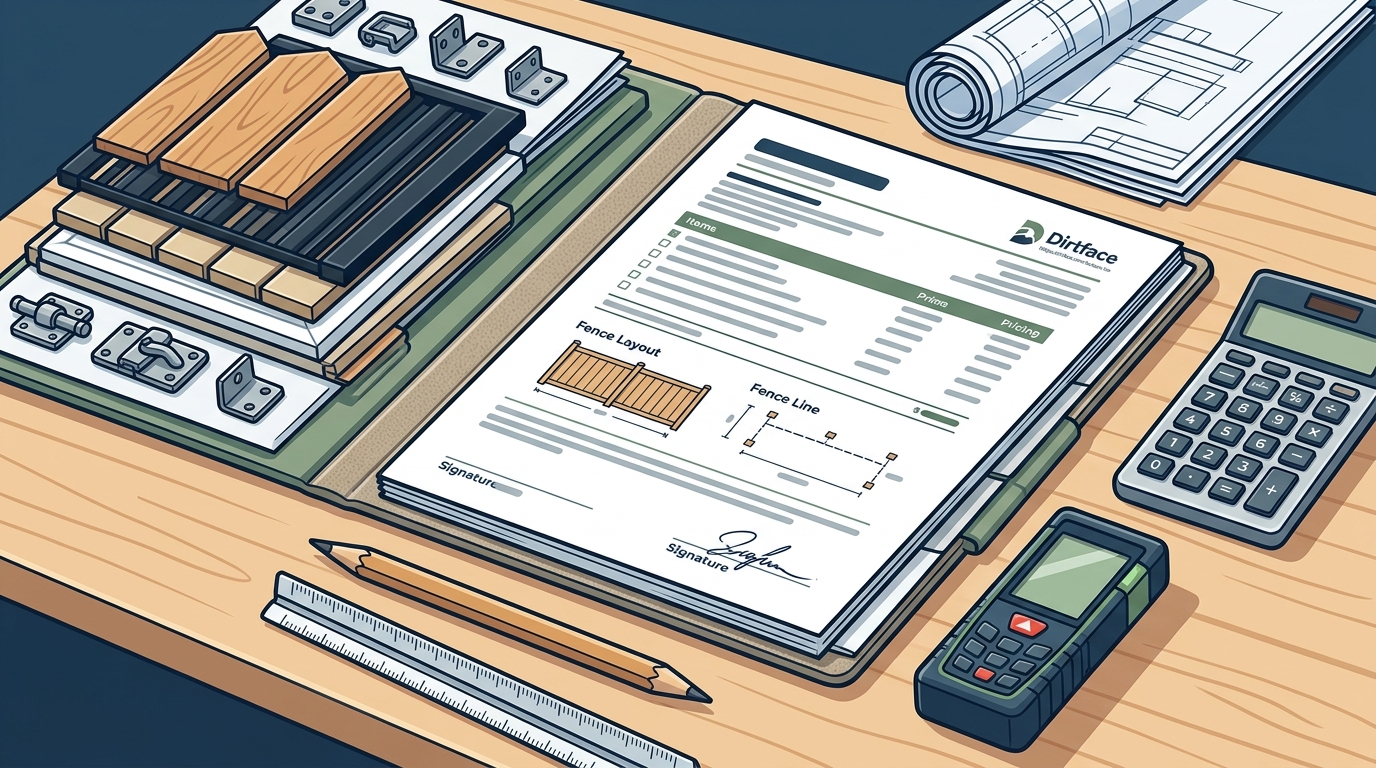
A fence proposal is a formal document that presents project scope, materials, labor, timeline, and total cost to a prospective client. It is more than a price tag; it is your first impression as a business professional.
Research shows that proposal quality directly impacts win rates. Contractors who present polished, detailed proposals consistently outperform those competing on price alone. As one analysis of over 1,000 construction projects found, contractors who follow a systematic approach consistently win 40% or more of their bids, compared to an industry average of 25%.
For fence contractors, this means every proposal you send should look professional, be easy to understand, and leave the homeowner or property manager feeling confident in your abilities.
Anatomy of a Winning Fence Proposal
A strong fence proposal includes several essential components. Missing any one of them can raise red flags for customers.
Must-Have Sections
| Section | Purpose | Impact on Win Rate |
|---|---|---|
| Company Overview & Branding | Establishes credibility and trust | High |
| Project Scope & Fence Design | Shows you understand the job | Very High |
| Itemized Material List | Proves transparency and accuracy | Very High |
| Labor & Timeline | Sets clear expectations | High |
| Pricing Summary | Gives a clear bottom line | Very High |
| Terms & Conditions | Protects both parties | Medium |
| Warranty Information | Reduces buyer risk | High |
Including a visual fence design or shop drawing elevates your proposal significantly. Platforms like Dirtface's shop designer let you create detailed drawings that show the customer exactly what they are getting.
Pricing Transparency
Homeowners overwhelmingly prefer itemized quotes over lump-sum numbers. Breaking down material costs, labor, overhead, and concrete expenses builds trust and reduces follow-up questions.
Getting Your Estimates Right First
A proposal is only as good as the estimate behind it. Inaccurate estimates lead to underbidding (killing your margins) or overbidding (losing the job). A fence estimate is a calculated projection of all materials, labor hours, and costs required to complete a specific fencing project.
To build accurate estimates, you need reliable material calculations for posts, rails, pickets, concrete, hardware, and gates. If you are quoting chainlink fences, vinyl fences, or wood fences, each style has unique material requirements that must be calculated precisely.
Manual calculations using spreadsheets are prone to errors. Modern fence estimating software automates measurements and applies industry-ready pricing, dramatically reducing mistakes and saving hours per quote.
Using Fence Estimating Software to Streamline Proposals
Fence estimating software is a digital platform purpose-built to help fence contractors calculate materials, labor, and costs, then generate polished proposals automatically. The right tool transforms a process that used to take hours into one that takes minutes.
What to Look For
The best platforms let you quickly calculate time estimates, labor costs, material lists, overhead, concrete costs, and profit margins. They come pre-loaded with templates for chainlink, wood, vinyl, and ornamental fences so you can start quoting immediately. Look for software that also handles RFQs, job management, invoicing, and customer tracking so you are not juggling multiple apps.
How Dirtface Handles Proposals
Dirtface generates clear, professional fence quotations that clients instantly understand, which drastically improves your chances of winning the job. The platform lets you customize parts, labor pricing, and branding templates so every quotation is on-brand and profitable. You can also integrate with QuickBooks for seamless invoicing and point-of-sale payments.
Getting started is straightforward. The quick-start guide walks new users through setup in minutes.
Branding and Customization Tips
Your proposal should look like it came from a established company, not a side hustle. Consistent branding across every document signals professionalism and builds recognition over time.
Practical Branding Steps
- Add your company logo, colors, and contact information to every proposal template.
- Use consistent fonts and formatting across estimates, invoices, and contracts.
- Include a brief company bio with years of experience and relevant certifications.
- Add photos of completed fence projects as social proof.
Dirtface lets you customize branding templates so every document reflects your company identity without extra design work.
Common Proposal Mistakes Fence Contractors Make
Even experienced contractors fall into traps that cost them jobs. Here are the most frequent proposal pitfalls and how to avoid them.
Vague scope descriptions. Saying "install fence" without specifying fence type, height, linear footage, gate count, and materials leaves too much room for misunderstanding. Always be specific.
No visual aids. A proposal without a diagram or site sketch feels incomplete. Including a shop drawing or layout map gives customers confidence that you have planned the job properly.
Slow turnaround. Homeowners often request multiple quotes. The contractor who delivers a professional proposal first frequently wins. Speed matters, and software-generated proposals give you a major advantage.
Ignoring add-on opportunities. Gates, post caps, staining, and removal of old fencing are all profitable add-ons that increase your average ticket. Include them as optional line items in every proposal.
Key Takeaways
- Professional proposals directly influence your win rate; the industry average for contractors is only 25%, but structured approaches can push it to 40% or higher.
- Every fence proposal should include project scope, itemized materials, labor costs, timeline, terms, and warranty info.
- Accurate estimates are the foundation of every good proposal; errors lead to lost profits or lost jobs.
- Fence estimating software automates calculations and generates branded proposals in minutes instead of hours.
- Visual elements like shop drawings and project photos significantly boost customer confidence.
- Fast proposal turnaround gives you a competitive edge over slower competitors.
- Always include optional add-ons to increase your average project value.
Frequently Asked Questions
What should a fence proposal include?
A fence proposal should include your company information, project scope, fence design details, an itemized material and labor breakdown, total pricing, project timeline, terms and conditions, and warranty details.
How long should it take to create a fence proposal?
With fence estimating software, you can generate a complete, professional proposal in 10 to 15 minutes. Manual methods using spreadsheets or handwritten quotes typically take one to two hours per estimate.
What is a good win rate for fence contractors?
The average commercial contractor wins about 25% of submitted bids. Fence contractors who use professional proposals and systematic estimating processes can realistically achieve win rates of 40% or higher.
Do I need software to create fence proposals?
You do not strictly need software, but it provides enormous advantages in speed, accuracy, and professionalism. Platforms like Dirtface come pre-loaded with fence templates and automate material calculations, saving significant time.
How can I make my fence proposals stand out?
Include branded templates, detailed shop drawings, itemized pricing, project photos, and optional add-ons. Delivering your proposal quickly and in a polished digital format also sets you apart from competitors.
Should I itemize materials or use a lump-sum price?
Itemized proposals generally perform better because they build trust and transparency. Customers appreciate seeing exactly what they are paying for, which reduces price objections and follow-up questions.
Can fence estimating software handle different fence types?
Yes. Leading platforms come pre-loaded with templates for chainlink, wood, vinyl, and ornamental fences, and are flexible enough to configure virtually any custom fence design.
Start Creating Better Proposals Today
If you are still writing fence quotes by hand or wrestling with spreadsheets, you are leaving jobs on the table. Professional proposals win more work, and the right software makes them effortless. Sign up for Dirtface and start generating polished, accurate fence proposals that help you close more deals and grow your business.