
Winning fence jobs starts long before your crew touches a post hole digger. It starts with the proposal. A professional fence proposal is a branded, itemized document that communicates scope, materials, timelines, and pricing so clearly that the homeowner or property manager feels confident signing on the spot. According to industry data, the average bid win rate for commercial contractors sits around 25%, meaning most estimates never convert. The good news? With the right process and fence estimating software, you can dramatically improve that number. This guide walks you through every step of creating proposals that close more fence projects.
What Is a Fence Proposal?
A fence proposal is a formal document that outlines the scope of work, materials, labor costs, project timeline, and total price for a fencing project. Unlike a rough verbal quote, a written proposal serves as both a sales tool and a preliminary contract.
A professional proposal is one that includes your company branding, clear line items, material specifications, and terms of service. It tells the customer exactly what they are getting and what it will cost, leaving no room for confusion.
Why Professional Proposals Win More Jobs
Presentation matters. When a homeowner receives three bids, the contractor with the clearest, most polished proposal almost always has the advantage. According to a 2025 analysis of over 1,000 construction projects, contractors who use structured proposal processes consistently win 40% or more of their bids compared to the 25% industry average.
Your proposal is your sales pitch. It must be professional, comprehensive, and compelling. A sloppy estimate on a napkin signals that your work might be equally careless. With tools like Dirtface, you can generate clear, professional fence quotations that clients instantly understand, drastically improving your chances of winning the job.
Essential Elements of a Winning Fence Proposal
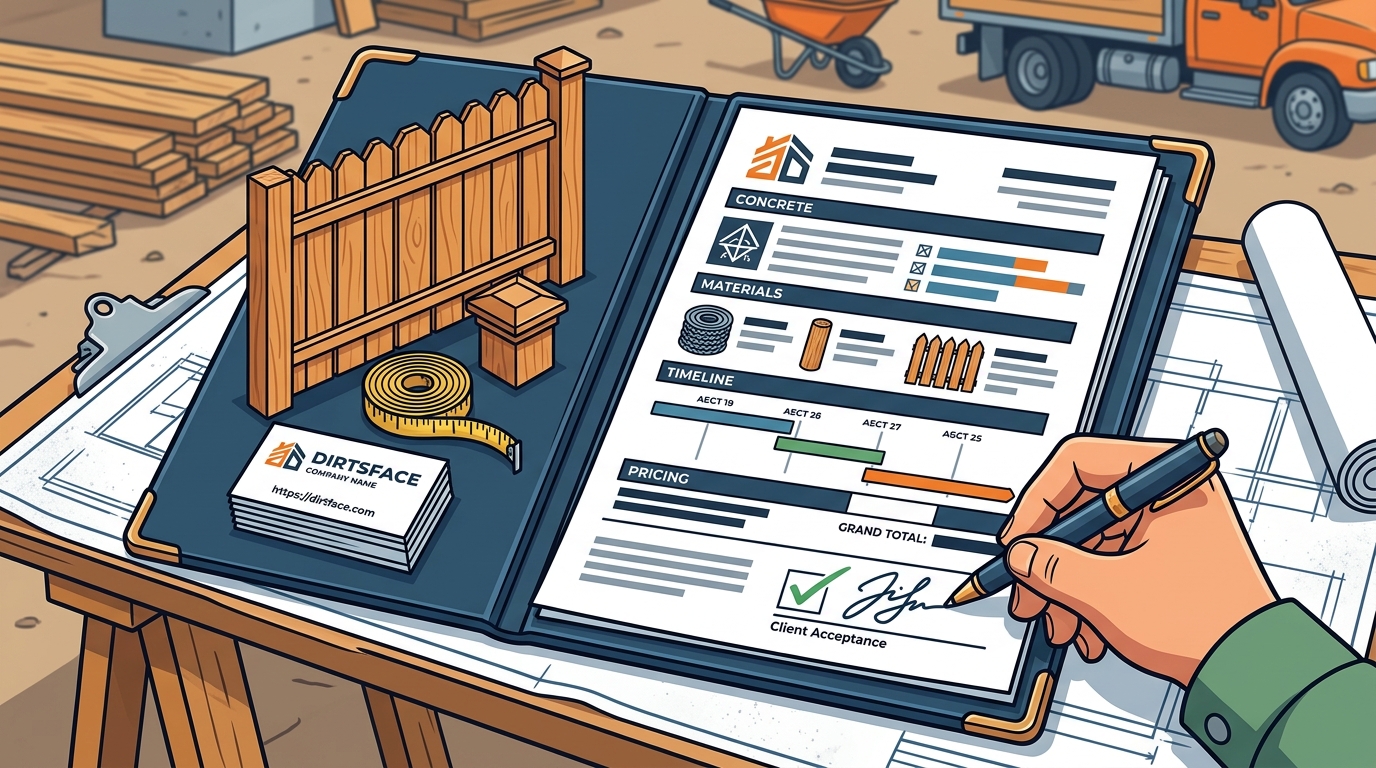
Company Branding and Contact Info
Every proposal should feature your logo, company name, license number, phone, and email. Dirtface lets you customize your branding templates so every quotation looks polished and consistent.
Detailed Scope of Work
Spell out fence style, height, total linear footage, gate locations, and removal of existing fencing. Ambiguity leads to disputes. Clearly defined scope protects both you and your customer.
Itemized Material and Labor Breakdown
List posts, rails, pickets or panels, concrete, hardware, and labor as separate line items. Dirtface's estimating engine calculates material lists, labor costs, overhead, concrete costs, and profits automatically, so you never miss a component.
Step-by-Step: Building Your Fence Proposal
1. Gather Project Details On-Site
Measure the property, note terrain changes, identify underground utilities, and photograph the site. Accurate field data is the foundation of an accurate estimate.
2. Select Materials and Fence Style
Dirtface comes pre-loaded with many styles of chainlink, wood, vinyl, and ornamental fences. The software is flexible enough to set up any kind of fence you can imagine, so you can match your catalog to the customer's preferences in minutes.
3. Generate the Estimate and Proposal
Enter measurements and selections into your fence estimating software. The system calculates time estimates, labor, materials, overhead, and profit instantly. Review the numbers, attach your terms, and send a branded PDF directly to the customer.
Software vs. Manual Proposals: A Comparison
| Factor | Manual (Spreadsheet/Paper) | Fence Estimating Software (Dirtface) |
|---|---|---|
| Time per proposal | 45-90 minutes | 10-20 minutes |
| Material accuracy | Prone to human error | Automated calculations |
| Branding consistency | Varies by salesperson | Templated and uniform |
| Price updates | Manual entry required | Centralized catalog updates |
| Customer impression | Inconsistent | Professional every time |
| Add-on upsells | Often forgotten | Built-in prompts for profit-boosting add-ons |
The difference is clear. Software-driven proposals save time, reduce errors, and present a more professional image to potential customers.
Common Proposal Mistakes Fence Contractors Make
Underestimating materials. Forgetting concrete, post caps, or tension wire leads to margin erosion. A proper fence catalog setup prevents these oversights by auto-populating every required component.
Omitting terms and conditions. Payment schedules, warranty details, and change-order policies should appear on every proposal. Without them, you have no contractual protection.
Delaying the follow-up. Speed wins. Industry research shows that teams using proposal software cut average response time significantly. The faster you deliver a polished quote, the more likely you are to close the deal before a competitor responds.
Key Takeaways
- A fence proposal is a branded document covering scope, materials, labor, timeline, and total cost for a fencing project.
- Professional proposals can help raise your bid win rate well above the 25% construction industry average.
- Every proposal should include company branding, itemized costs, scope of work, and terms and conditions.
- Fence estimating software like Dirtface cuts proposal creation time from over an hour to under 20 minutes.
- Pre-loaded fence templates for chainlink, wood, vinyl, and ornamental styles eliminate setup guesswork.
- Automated material calculations reduce costly errors that eat into your profit margins.
- Following up quickly with a polished proposal is one of the strongest predictors of winning the job.
Frequently Asked Questions
What should a fence proposal include?
A complete fence proposal should include your company information and branding, a detailed scope of work, itemized material and labor costs, project timeline, payment terms, warranty information, and terms and conditions.
How long should it take to create a fence estimate?
With manual methods, a detailed fence estimate can take 45 to 90 minutes. Using dedicated fence estimating software, most contractors generate accurate proposals in 10 to 20 minutes.
What is the average bid win rate for contractors?
According to industry data, the average bid win rate for commercial contractors is approximately 25%. However, contractors who use professional proposal processes and software tools regularly achieve win rates of 40% or higher.
Can fence estimating software handle different fence types?
Yes. Platforms like Dirtface come pre-loaded with hundreds of fence templates covering chainlink, wood, vinyl, and ornamental styles. You can also create custom configurations for specialty fences.
How does proposal quality affect closing rates?
Proposal quality directly influences customer confidence. A clear, branded, itemized proposal demonstrates professionalism and reduces buyer hesitation, which increases your likelihood of winning the contract.
What is fence estimating software?
Fence estimating software is a specialized tool that helps fence contractors calculate materials, labor costs, overhead, and profit for fencing projects. It automates the proposal creation process and produces professional quotations.
Should I include photos or drawings in my fence proposal?
Yes. Visual elements like shop drawings or site photos help customers understand exactly what they are approving. Dirtface allows you to create detailed shop drawings and attach them to your estimates.
Start Generating Professional Fence Proposals Today
Stop losing jobs to sloppy estimates. Sign up for Dirtface and start creating accurate, branded fence proposals in minutes. Built by fence professionals for fence professionals, it is the fastest way to win more work and grow your business.