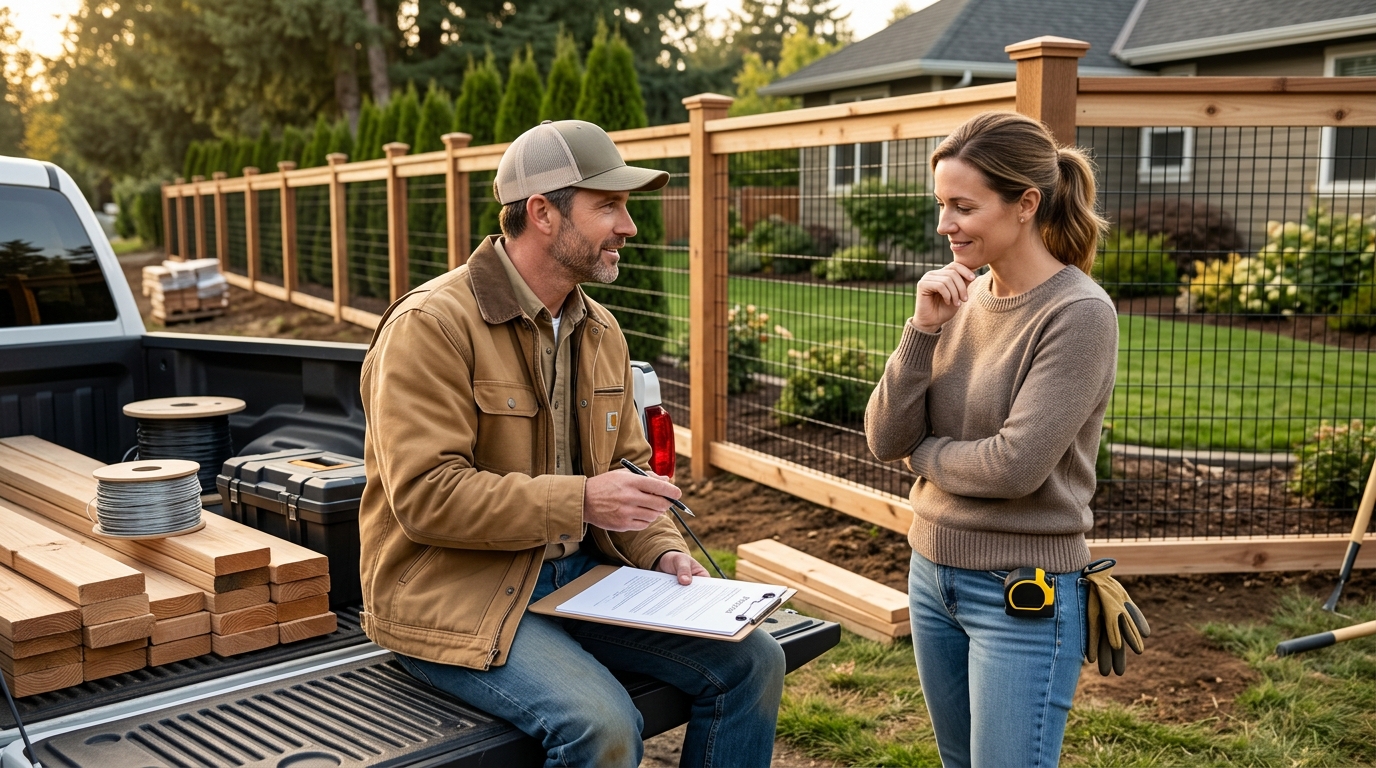
Winning fence jobs starts long before you drive a single post into the ground. It starts with the proposal. A professional fence proposal communicates your expertise, sets clear expectations on materials and pricing, and gives homeowners the confidence to sign. Yet many fence contractors still rely on handwritten notes or basic spreadsheets, leaving money on the table. According to industry data, contractors who present multiple options in their proposals see close rates jump from 42% to 52%. In this guide, you will learn exactly how to create polished, accurate fence proposals that win more work and protect your margins.
What Is a Fence Proposal?
A fence proposal is a formal document that outlines the scope, materials, labor costs, timeline, and terms for a fencing project. It serves as both a sales tool and a binding reference point once signed. Unlike a rough estimate scribbled on the back of a business card, a professional proposal establishes credibility and reduces ambiguity for the homeowner.
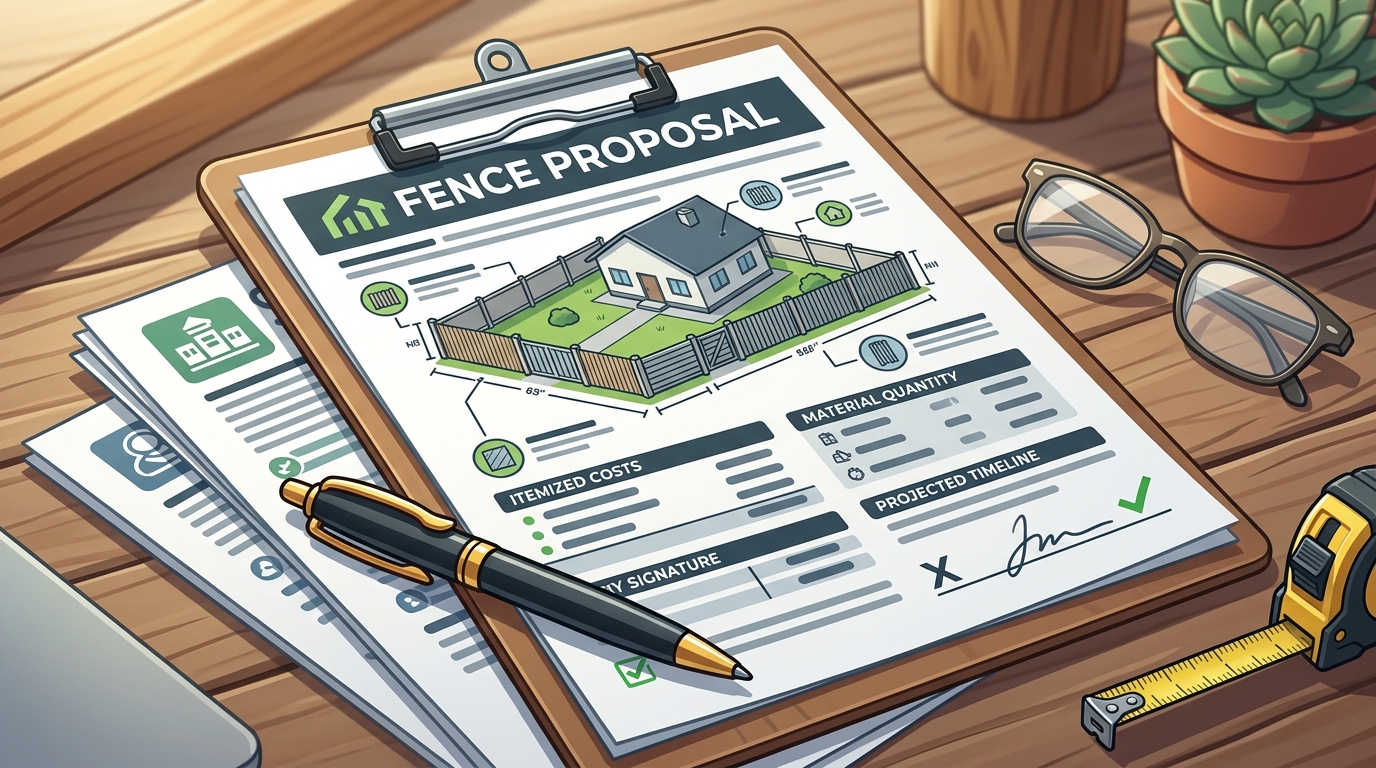
A well-structured proposal should include scope (what you will do), materials and allowances, timeline, payment schedule, warranty information, and exclusions. When homeowners compare bids, the contractor with the clearest, most detailed proposal almost always has the advantage.
Why Professional Proposals Win More Fence Jobs
The data is clear: presentation matters as much as price. A survey by ACCA and Farmington Consulting found that contractors who offer four or more options see close rates jump from 42% to 52%, yet only 10% of contractors actually do this. For fence contractors juggling chainlink, wood, vinyl, and ornamental quotes, offering tiered options is a natural fit.
Homeowners do not just buy on price. They buy on clarity. A polished proposal signals that you run a legitimate operation, reducing the perceived risk of hiring you. Speed also matters: research suggests that if you do not respond to a lead within 5 minutes, your chances of converting that lead can decrease by up to 400%.
Essential Elements of a Fence Proposal
Scope and Site Details
Clearly define the total linear footage, fence style, height, gate locations, and terrain considerations. Include any demolition or removal of existing fencing. Ambiguity here leads to disputes later.
Material and Labor Breakdown
A material takeoff is a detailed, itemized list of every component needed for the fence project. List posts, rails, pickets, concrete, hardware, and any specialty items. Separate material costs from labor so the homeowner sees exactly where their money goes. Tools like Dirtface's fence estimating features auto-calculate material quantities based on fence design, eliminating manual counting errors.
Pricing Tiers and Payment Terms
Present at least a good-better-best pricing structure. Include a payment schedule (for example, 50% deposit, 40% at material delivery, 10% on completion). Clear payment terms protect your cash flow and set expectations.
| Proposal Element | Purpose | Impact on Close Rate |
|---|---|---|
| Tiered pricing (3+ options) | Gives homeowner choice and control | Up to 10% higher close rate |
| Itemized material list | Builds trust through transparency | Reduces price objections |
| Visual fence diagram | Helps homeowner visualize the project | Faster approval decisions |
| Clear payment schedule | Sets financial expectations | Fewer cancellations |
| Warranty details | Reduces perceived risk | Justifies premium pricing |
Step-by-Step: Building Your Fence Proposal
1. Conduct the Site Visit
Measure total linear footage, note grade changes, mark utility lines, and photograph the property. Use a measuring wheel or GPS-based tools for accuracy. Document any obstacles like trees, slopes, or easements that affect material needs.
2. Select the Fence Design and Materials
Choose from pre-loaded templates or build a custom configuration. With Dirtface's catalog system, hundreds of chainlink, wood, vinyl, and ornamental fence templates are already available, so you can match the homeowner's preferences quickly.
3. Generate the Estimate
Calculate labor hours, material quantities, overhead, concrete costs, and profit margin. Creating a fence estimate in Dirtface automates these calculations so you can produce an accurate quote in minutes rather than hours. The software factors in your custom labor rates and supplier pricing.
4. Package and Send the Proposal
Compile the estimate into a branded, professional PDF or digital proposal. Include your company logo, license number, insurance details, and terms and conditions. Send it electronically for faster turnaround. Contractors who follow up promptly and present clean documents consistently outperform those who delay.
How Fence Estimating Software Speeds Up the Process
Manual proposal creation is slow and error-prone. A fence estimating platform is a specialized software tool that automates material takeoffs, labor calculations, and proposal formatting for fence contractors. Dirtface was built by fence professionals specifically for the fencing industry, combining estimating, invoicing, scheduling, and lead management in a single platform.
Key advantages of using dedicated software include automated material lists that reduce costly miscalculations, customizable branding templates that make every quote look professional, and integrated job management from proposal add-ons that increase profit to final invoicing. Instead of juggling spreadsheets, CRMs, and accounting apps separately, you handle everything in one place.
Getting started is straightforward. The Dirtface getting started guide walks new users through setup so you can begin quoting within your first session.
Common Proposal Mistakes That Cost You Jobs
Being vague about scope. If your proposal does not specify what is included and excluded, homeowners will assume everything is included. This leads to disputes, change orders, and negative reviews.
Quoting only one option. Giving a single price forces a yes-or-no decision. Tiered proposals keep the conversation going and often push homeowners toward the mid-range or premium option.
Slow follow-up. Industry research shows that 80% of sales require at least five follow-up touches, yet 44% of salespeople give up after just one. Automate your follow-up sequence to stay top-of-mind without adding to your workload.
Ignoring branding. A proposal with no logo, inconsistent formatting, or typos signals a lack of professionalism. Use branded templates to ensure consistency across every quote your team sends.
Key Takeaways
- A professional fence proposal includes scope, itemized materials, labor costs, timeline, payment terms, and warranty details.
- Offering three or more pricing tiers can increase your close rate by up to 10 percentage points.
- Speed matters: respond to leads within 5 minutes to maximize your conversion odds.
- Fence estimating software like Dirtface automates material takeoffs and proposal formatting, saving hours per quote.
- Always define exclusions and change-order rules to avoid scope disputes.
- Persistent, systematic follow-up is critical since most deals require multiple touchpoints to close.
- Branded, consistent proposals build trust and justify premium pricing.
Frequently Asked Questions
What should a fence proposal include?
A complete fence proposal should include the project scope (linear footage, fence style, height, gate locations), an itemized material list, labor costs, a timeline, payment schedule, warranty terms, and clearly stated exclusions.
How long should it take to create a fence proposal?
With manual methods, a detailed fence proposal can take 1 to 3 hours. Using dedicated fence estimating software, most contractors can produce an accurate, branded proposal in under 15 minutes.
What is a good close rate for fence contractors?
A healthy close rate for contractors on qualified leads is typically 25% to 40%. If your rate falls below 15%, it generally signals a problem with your sales process or proposal quality. If it consistently exceeds 50%, you may be underpricing your work.
How many pricing options should I include in a fence proposal?
At minimum, offer three options (good, better, best). Research shows that contractors presenting four or more options see measurably higher close rates compared to those offering only one or two choices.
Can fence estimating software handle different fence types?
Yes. Platforms like Dirtface come pre-loaded with templates for chainlink, wood, vinyl, and ornamental fences. The software is flexible enough to configure virtually any custom fence design as well.
How do I follow up after sending a fence proposal?
Follow up within 24 hours of sending the proposal. Use a combination of phone calls, texts, and email. Be persistent but professional, and plan for at least five to six touchpoints before moving on.
Should I include a visual diagram in my fence proposal?
Absolutely. A visual diagram or shop drawing helps homeowners understand exactly what they are getting. It reduces misunderstandings and speeds up the approval process.
What is the biggest mistake contractors make with proposals?
The most common mistake is being vague about scope. Unclear proposals lead to disputes, change orders, and unhappy customers. Define what is included and what is not in every proposal you send.
Ready to Win More Fence Jobs?
Stop spending hours on manual estimates and start sending professional proposals that close. Sign up for Dirtface and generate your first accurate, branded fence proposal in minutes.