A professional fence proposal is the document that separates contractors who win jobs from those who lose them. Studies consistently show that clear, well-organized bids build client trust and close deals faster. Yet many fence contractors still rely on handwritten notes or generic templates that fail to communicate scope, pricing, and timelines effectively. In this guide, you will learn a proven, step-by-step process for creating polished fence proposals that impress homeowners, reduce misunderstandings, and grow your bottom line.
What Is a Fence Proposal?
A fence proposal is a formal document presented to a client that outlines the scope of work, materials, costs, timeline, and terms for a fencing project. It typically includes a description of the fencing materials, project scope, and estimated completion date. When a client signs the proposal, it often becomes a legally binding contract.
A strong proposal does more than list prices. It communicates professionalism, sets expectations, and gives the homeowner confidence that your company is the right choice.
Why Professional Proposals Win More Jobs
Many contractors assume that offering the lowest price is enough to land a project. In reality, how a project is presented through the proposal is often the main factor in getting hired. A sloppy, disorganized bid signals that the work itself may be sloppy too.
Building Trust Through Clarity
Homeowners comparing multiple bids naturally gravitate toward the one that is easiest to understand. A clear, itemized proposal builds trust by showing the client exactly what they are paying for. Pre-filled sections for scope of work, fencing materials, post layout, and gate specs help present a transparent project overview.
Reducing Disputes
By providing detailed information upfront, both the contractor and client avoid misunderstandings or disputes later in the project. Outlining payment terms, change-order procedures, and warranty details protects your business legally and financially.
Essential Elements Every Fence Proposal Needs
A well-rounded fence proposal should include line-item pricing for different fence types, post spacing and layout, gate locations, site preparation details, cleanup expectations, and a summary of the property layout. Below is a breakdown of what to include.
| Section | What to Include | Why It Matters |
|---|---|---|
| Company Info | Business name, license number, phone, email | Establishes credibility instantly |
| Client & Job Info | Client name, property address, site notes | Personalizes the proposal |
| Scope of Work | Fence type, style, height, total footage, gates | Eliminates ambiguity about deliverables |
| Material Specs | Manufacturer, grade, color, post spacing | Prevents substitution disputes |
| Pricing | Itemized labor, materials, concrete, overhead | Justifies total cost transparently |
| Timeline | Start date, milestones, estimated completion | Sets realistic client expectations |
| Payment Terms | Deposit, progress payments, final payment | Protects your cash flow |
| Warranty & Insurance | Coverage details, duration, exclusions | Builds long-term confidence |
| Signatures | Contractor and client signature lines with date | Makes the document legally binding |
Including a simple overhead drawing of the fence layout is another way to make your proposal stand out. Visual references help homeowners see exactly what the finished project will look like. Tools like Dirtface's fence estimating features can auto-generate these layouts.
Step-by-Step Process for Building a Proposal
1. Conduct a Thorough Site Visit
Arrive prepared. Measure the property, note grade changes, identify underground utilities, and discuss the homeowner's goals. This information feeds directly into your estimate and proposal accuracy.
2. Calculate Materials and Labor
Use a reliable fence estimating workflow to calculate posts, panels, rails, concrete, gates, and labor hours. Automated tools eliminate math errors and save hours compared to spreadsheet methods. Dirtface's software empowers you to quickly calculate time estimates, labor costs, material lists, overhead expenses, concrete costs, and profits.
3. Assemble the Proposal Document
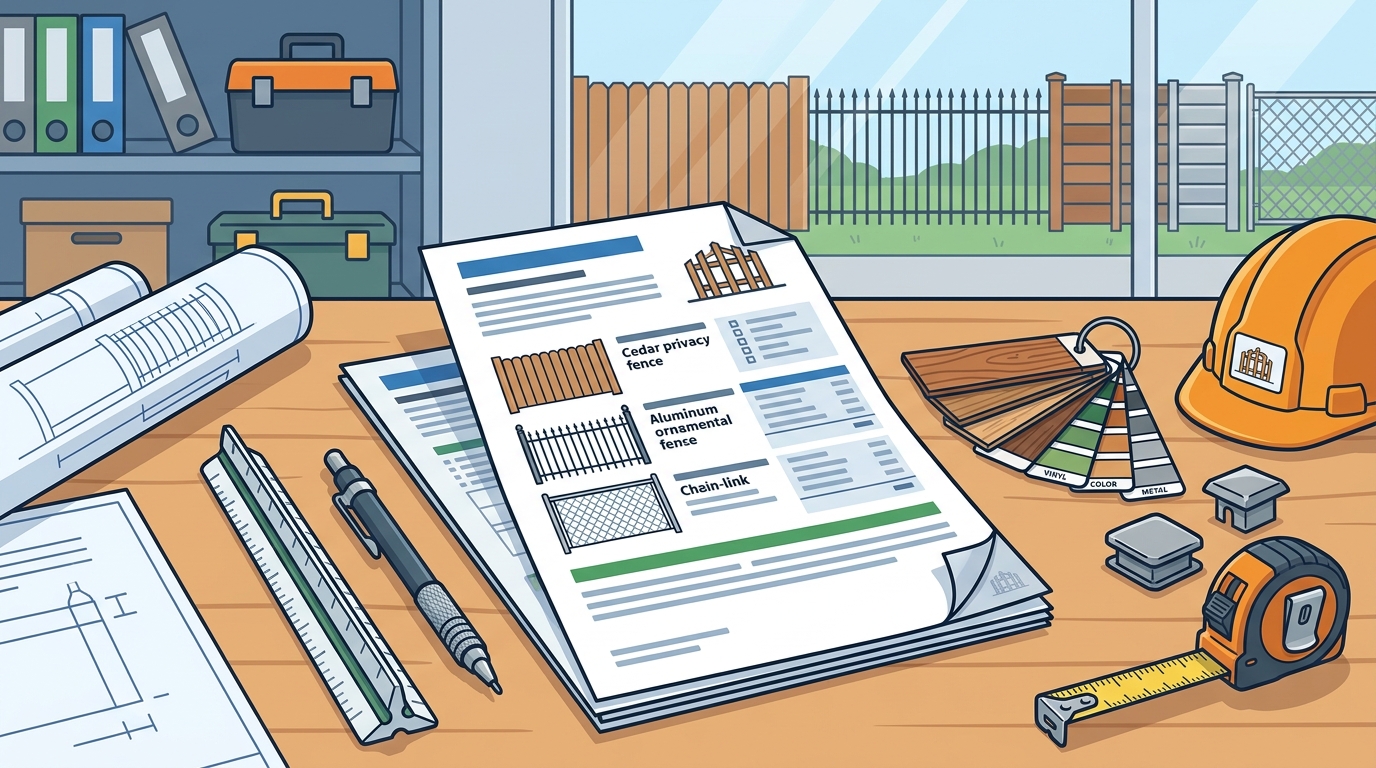
Combine your site data and cost calculations into a polished proposal using branded templates. With Dirtface's customizable templates, you can build professional quotations that clients instantly understand. Pre-loaded templates for wood, vinyl, chainlink, and ornamental fences speed up the process dramatically.
4. Review, Send, and Follow Up
Proofread every detail. Send the proposal digitally for faster turnaround and include an expiration date to create urgency. A follow-up call within 48 hours can increase close rates significantly.
Software vs. Manual Proposals: A Comparison
Fence estimating software is a digital platform that automates material takeoffs, pricing, and proposal generation for fence contractors. Manual methods involve spreadsheets, handwritten forms, or generic word-processing documents. Here is how they compare.
| Factor | Manual / Spreadsheet | Fence Estimating Software |
|---|---|---|
| Speed | 30-60 min per estimate | Under 10 min per estimate |
| Accuracy | Prone to formula and data-entry errors | Automated calculations reduce errors |
| Branding | Inconsistent formatting | Custom branded templates |
| Mobile Access | Limited; requires laptop | Any device, 24/7 |
| Material Takeoffs | Manual counting | Auto-generated from fence design |
| Client Experience | Basic PDF or paper | Professional, easy-to-read digital proposal |
| Job Tracking | Separate tool needed | Built-in project management |
Platforms like Dirtface come pre-loaded with hundreds of fence templates, allowing you to work quickly without building designs from scratch. The software also integrates invoicing, scheduling, and profit-boosting contract add-ons into a single workflow.
Branding and Presentation Tips
Your proposal represents your company before you ever swing a hammer. Here are practical ways to elevate its appearance and effectiveness.
Use Consistent Branding
Add your logo, company colors, and contact information to every page. Dirtface lets you customize branding and templates so every quotation reflects your unique business identity.
Write in Plain Language
Avoid excessive jargon. Homeowners are not fence experts. Describe materials and processes in simple terms so the client understands exactly what they are getting.
Include Visually Organized Pricing
Break costs into clear line items rather than providing a single lump sum. Transparency in pricing helps homeowners compare your proposal to competitors and see the value you deliver.
Key Takeaways
- A fence proposal is more than a price list; it is a trust-building sales document that directly impacts your close rate.
- Every proposal should include scope of work, itemized pricing, material specs, timeline, payment terms, and signatures.
- Conducting a thorough site visit before estimating prevents costly errors and change orders.
- Fence estimating software like Dirtface cuts proposal creation time from over an hour to under ten minutes.
- Consistent branding and plain language make your proposals more professional and easier for clients to approve.
- Including a site layout drawing or diagram helps homeowners visualize the finished project.
- Digital proposals with e-signature capability speed up approvals and reduce paperwork.
Frequently Asked Questions
What should a fence proposal include?
A complete fence proposal should include your company information, the client's details, a detailed scope of work, material specifications, itemized pricing, a project timeline, payment terms, warranty information, and signature lines for both parties.
How long should a fence proposal be?
Most residential fence proposals are one to three pages. The key is thoroughness without unnecessary filler. Every section should serve a clear purpose.
Is a signed fence proposal legally binding?
Yes. Once both parties sign a fence proposal that includes terms and conditions, it typically functions as a legally binding contract. Consult a local attorney to ensure your document meets your state's requirements.
Can I create fence proposals on my phone?
Yes. Mobile-friendly fence estimating platforms like Dirtface allow you to access and edit professional quotations from any device on the job site or in the office, 24/7.
What is the difference between a fence estimate and a fence proposal?
A fence estimate is an approximate cost calculation for a project. A fence proposal is a more comprehensive document that wraps the estimate together with scope of work, terms, timelines, and a formal agreement structure.
How do I price a fence proposal?
Common pricing methods include cost-plus, time-and-materials, and unit pricing. Cost-plus charges the project cost plus an agreed-upon fee for profit. Time-and-materials bills for material costs and an hourly labor rate. Unit pricing bills separately for different parts of the project.
Why should I use software instead of a paper template?
Software automates calculations, reduces errors, enforces consistent branding, and stores all your proposals in the cloud. It also integrates with invoicing and project management so you run your entire business from one platform.
How quickly can I generate a proposal with Dirtface?
Most users generate a complete, professional fence proposal in under ten minutes using Dirtface's pre-loaded templates and automated material takeoff tools. You can start with a free 14-day trial to test the full platform.
Start Creating Professional Fence Proposals Today
Stop losing jobs to competitors with better-looking bids. Dirtface gives you everything you need to build accurate, branded fence proposals in minutes. Start your free 14-day trial today and see how fast you can transform your estimating process.