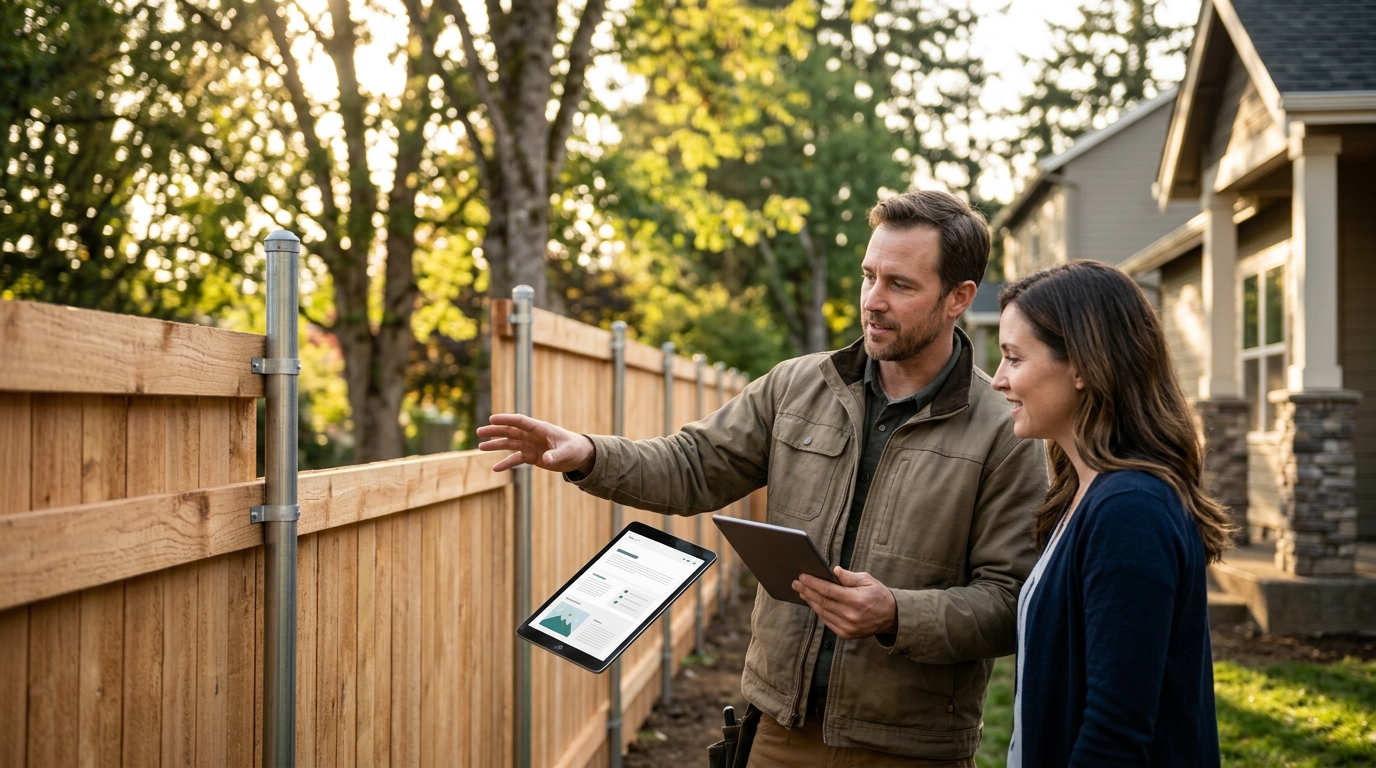
Winning fence jobs is not just about offering the lowest price. Homeowners and commercial buyers choose the contractor who makes them feel the most confident about the outcome. A professional proposal is your single best tool for building that confidence. It shows your expertise, communicates scope clearly, and eliminates the guesswork that causes prospects to hesitate. In this guide, you will learn exactly how to create fence proposals that close more deals, save you hours every week, and position your business as the obvious choice in a competitive market.
Why Professional Proposals Win More Fence Jobs
A fence proposal is a detailed document that outlines the scope, materials, timeline, and cost of a fencing project for a potential client. It goes far beyond a simple price quote. When homeowners request estimates from multiple contractors, they rarely choose on price alone. They pick the contractor who inspires the most trust.
According to an ACCA and Farmington Consulting survey of over 1,000 contractors, those who present multiple options see close rates jump from 42% to 52%. Presenting tiered options inside a polished proposal gives your prospect a sense of control and often increases the average ticket size.
Speed matters too. When a homeowner reaches out, they are often contacting several contractors at once. Responding with a professional proposal within hours, not days, dramatically improves your odds. Contractors who always offer financing in their proposals close at nearly 50%, compared to 38% for those who do not.
Anatomy of a Winning Fence Proposal
High-converting proposals share a consistent structure. Research from Proposify's State of Proposals report identifies seven essential elements that guide prospects through a natural decision-making process.
Cover Page and Company Overview
Start with your logo, company name, and contact details. Include a brief overview of your experience and qualifications. This is where you differentiate yourself from competitors who send a number on a napkin.
Scope of Work and Materials
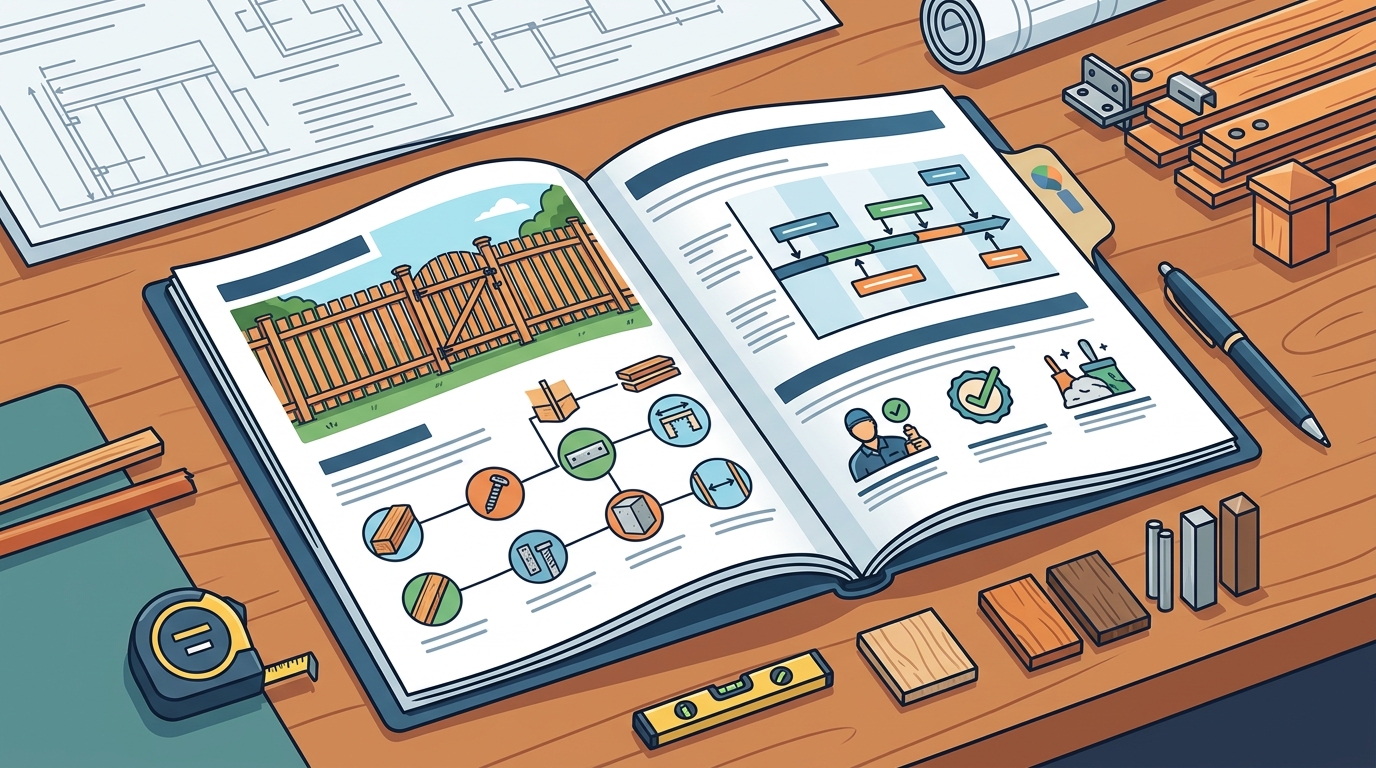
Clearly describe the fence style, linear footage, gate locations, post spacing, and all materials. A detailed scope of work is the section that proves you actually listened during the site visit. Use itemized material lists so the client sees exactly what they are paying for.
Pricing, Timeline, and Terms
Present pricing with a good-better-best structure when possible. Include your projected start date, estimated completion time, payment schedule, warranty terms, and e-signature capability. Including a signable contract directly in the proposal can speed up the sales cycle by up to 42%, according to DocuSign data.
Step-by-Step: Building Your Fence Proposal
Step 1: Conduct a thorough site visit. Measure the property, note terrain challenges, identify underground utilities, and photograph the site. Accurate measurements are the foundation of every credible proposal.
Step 2: Select fence style and materials. Whether it is wood, vinyl, chain link, or ornamental iron, choose the right products and calculate material quantities. A material takeoff is the process of listing every component needed to complete the fence installation.
Step 3: Calculate labor, overhead, and profit. Factor in crew hours, concrete, permits, equipment rental, and your target margin. Tools like Dirtface's fence estimating features let you calculate time estimates, labor costs, material costs, overhead, and profit automatically.
Step 4: Assemble the proposal document. Combine your scope, pricing tiers, drawings, and terms into a branded template. A fence quote app is a mobile-friendly application that lets contractors build and send estimates from the field or office.
Step 5: Send and follow up. Email or text the proposal the same day as the site visit. Then follow up on Day 2, Day 5, and Day 10 if you have not heard back.
Using Fence Estimating Software to Automate Proposals
Manual proposal creation is one of the biggest time drains for fence contractors. Dedicated fence estimating software eliminates the repetitive math, formatting, and data entry that slow you down.
Dirtface, for example, comes pre-loaded with hundreds of fence templates for chain link, wood, vinyl, and ornamental styles. You can customize parts, labor pricing, and branding so every proposal reflects your business. The platform also lets you generate clear, professional quotations that clients instantly understand, which drastically improves your chances of winning the job.
Because the software is cloud-based, you can access and edit proposals from any device on the job site or in the office, 24/7. This means you can present a polished proposal on-site before you even leave the driveway.
Common Proposal Mistakes Fence Contractors Make
Sending a Price Without Context
A number on a page will not win the job. Prospects need to understand the value behind the price. Always include scope details, material specifications, and photos.
Waiting Too Long to Follow Up
Most contractors take far too long to respond. Companies on average take 15 hours to respond via email. Getting a proposal out within hours puts you ahead of the competition immediately.
Skipping Upsell Opportunities
Proposals are the perfect place to present fence contract add-ons that increase profit, such as upgraded post caps, staining services, or extended warranties. These additions increase your average job value with minimal extra effort.
Manual vs. Software-Generated Proposals
| Factor | Manual Proposals | Software-Generated Proposals |
|---|---|---|
| Time per proposal | 45-90 minutes | 5-15 minutes |
| Accuracy | Prone to math errors | Automated calculations |
| Branding consistency | Varies by person | Standardized templates |
| Material takeoffs | Manual spreadsheet | Auto-generated from templates |
| Mobile access | Laptop or paper only | Any device, anywhere |
| Follow-up tracking | None built in | Integrated job management |
| Client impression | Inconsistent | Professional every time |
The difference is clear. Software-generated proposals save time, reduce errors, and project a level of professionalism that builds client trust from the first interaction.
Key Takeaways
- A professional fence proposal includes a cover page, scope of work, itemized materials, tiered pricing, timeline, and signable terms.
- Contractors who present multiple options see close rates rise from 42% to 52%.
- Same-day proposal delivery dramatically increases your chances of winning the job.
- Fence estimating software like Dirtface can cut proposal creation time from over an hour to under 15 minutes.
- Including e-signature capability in your proposal can speed up the sales cycle by up to 42%.
- Always include upsell opportunities such as add-on services, premium materials, or extended warranties.
- Follow up systematically on Day 2, Day 5, and Day 10 after sending your proposal.
Frequently Asked Questions
What should a professional fence proposal include?
A complete fence proposal should include a branded cover page, company overview, detailed scope of work, itemized material list, tiered pricing options, project timeline, payment terms, warranty information, and an e-signature block. Learn more about structuring estimates in our guide on how to create a fence estimate.
How long should it take to create a fence proposal?
With manual methods, a detailed fence proposal can take 45 to 90 minutes. Using fence estimating software with pre-loaded templates, you can generate an accurate, professional proposal in as little as 5 to 15 minutes.
Does proposal quality really affect close rates?
Yes. Research shows that contractors who present structured, multi-option proposals close at rates 10 percentage points higher than those who send a single price. A polished proposal signals competence and builds trust before work begins.
What is fence estimating software?
Fence estimating software is a specialized application designed to help contractors calculate materials, labor, and costs for fencing projects. Platforms like Dirtface combine estimating with job management, invoicing, and proposal generation in a single tool.
Can I create fence proposals from my phone?
Yes. Cloud-based fence quote apps allow you to build, edit, and send proposals from any device. Dirtface offers full mobile access so you can present a finished proposal on-site during the appointment.
How do I price a fence proposal with multiple options?
Use a good-better-best pricing model. For example, offer a standard cedar privacy fence as the base option, an upgraded version with premium post caps and stain as the middle tier, and a composite or vinyl alternative as the premium tier. This approach gives clients control and often increases average job value.
What is the average close rate for fence contractors?
Close rates vary widely. Contractors quoting unfiltered leads typically close 10 to 20% of proposals. Those who qualify leads and present professional proposals can achieve 40 to 60% close rates. The difference comes down to lead quality and proposal professionalism.
How soon should I send a fence proposal after the site visit?
Same-day delivery is the gold standard. Homeowners are often contacting multiple contractors simultaneously. The faster you deliver a complete, professional proposal, the more likely you are to win the job before your competition even follows up.
Ready to Win More Fence Jobs?
Stop spending hours on manual quotes. Start your free 14-day trial of Dirtface and see how fast you can generate professional fence proposals that close. No credit card required.