
Running a fence company that stays busy is one thing. Running one that is genuinely profitable is another challenge entirely. Many fence contractors fill their calendars yet still struggle to keep meaningful dollars at the end of each month. The gap between revenue and real profit usually comes down to pricing mistakes, operational waste, and missed upsell opportunities.
This guide lays out nine concrete strategies you can implement right now to push your fence business toward healthier margins and sustainable growth.
The State of Fence Business Profitability in 2025–2026
Before diving into tactics, it helps to understand the playing field. The U.S. fence construction industry has been on a steady climb, with revenue growing at a compound annual growth rate of 3.8% over the past five years to reach an estimated $24.7 billion in 2025. Globally, the fencing market is even larger and continues to expand.
Profit margins vary widely depending on how well a company is managed. Gross profit margins for small-to-medium fencing businesses typically land between 35% and 50%, while net profit margins usually fall between 10% and 25% after overhead. Well-run operations with smart pricing and efficient crews can push toward the higher end of that range—or beyond.
The opportunity is real, but so are the headwinds: labor shortages, fluctuating material costs, and saturated local markets all chip away at profit if you do not actively manage them.
Strategy 1: Stop Under-Pricing Your Jobs
Under-pricing is the single most common profit killer among fence contractors. The temptation to undercut competitors to win bids is strong, especially when you are building your book of business. But competing on price alone is a race to the bottom.
A healthy target profit margin for a fence company is roughly 25–40% of a project's total value. Some experienced operators even aim for 40–50% gross margins on individual jobs. If you are consistently hitting less than 20%, your pricing model likely has a gap in material markup, labor estimation, or overhead allocation.
Action steps
- Calculate your true overhead (insurance, vehicle costs, marketing, admin) and divide by billable hours to get an hourly overhead rate. Include this in every quote.
- Never quote without accounting for materials, direct labor, travel time and fuel, equipment depreciation, and your target profit margin.
- Price at or slightly above market average and justify the premium with superior service, warranties, or materials.
Strategy 2: Sell on Value, Not Cost
Differentiation is what allows you to charge more. If your service looks identical to every other fence contractor in town, customers will default to the cheapest option. You need a reason for them to choose you at a higher price point.
Ways to add value
- Quality guarantee or lifetime warranty: A written guarantee on workmanship sets you apart instantly.
- Transparent, detailed quotes: Break down every cost line item so the homeowner sees exactly what they are paying for and why.
- Tiered packages: Offer good, better, and best options. A basic package with standard materials and a one-year warranty, a mid-tier with upgraded materials and a three-year warranty, and a premium tier with top-shelf materials and extended coverage. Customers self-select into higher tiers more often than you would expect.
- Financing options: Making larger projects more accessible through payment plans can increase both close rate and average ticket size.
Strategy 3: Upsell on Every Single Job
Every fence installation is a chance to increase the project value through add-ons and upgrades. Many customers are happy to spend more when they understand the benefit.
High-margin upsell ideas
- Decorative post caps, lattice toppers, or custom designs
- Premium wood species like cedar or redwood instead of basic pine
- Staining or sealing services for wood fences
- Gate automation: Automatic openers and access control integrations on projects that can range from $800 to $2,500+
- Old fence removal: Charge $2–5 per linear foot including disposal
- Maintenance plans: Recurring revenue that also keeps you top of mind for referrals
Upselling premium materials or designs can meaningfully lift your average ticket. Clients often pay extra for durability or aesthetics once the value is explained.
Strategy 4: Tighten Your Material Sourcing
Material costs are one of the largest line items on any fence job. The cost of wood, vinyl, and metal fencing fluctuates frequently, so locking in favorable pricing is a direct path to better margins.
Practical moves
- Build long-term relationships with two or three suppliers. Loyalty and volume can secure meaningful discounts.
- Buy in bulk when cash flow allows, especially for your most common fence types.
- Always add 10–15% waste factor into your material estimate so surprise shortages do not eat into profit.
- Track actual material usage per job versus estimated. Over time this data tightens your quoting accuracy considerably.
Strategy 5: Maximize Crew Productivity
Labor efficiency makes or breaks profitability. Experienced crews complete jobs faster with less waste, which directly increases what you earn per hour of labor deployed.
How to improve crew productivity
- Schedule jobs geographically: Route optimization and efficient scheduling are critical to maximizing profitability. Clustering jobs in nearby areas cuts drive time significantly—some companies report reducing windshield time by up to 40%.
- Eliminate gaps between jobs: Maintain a pipeline of quoted jobs ready to start so crews are never sitting idle. Gaps between jobs represent lost income.
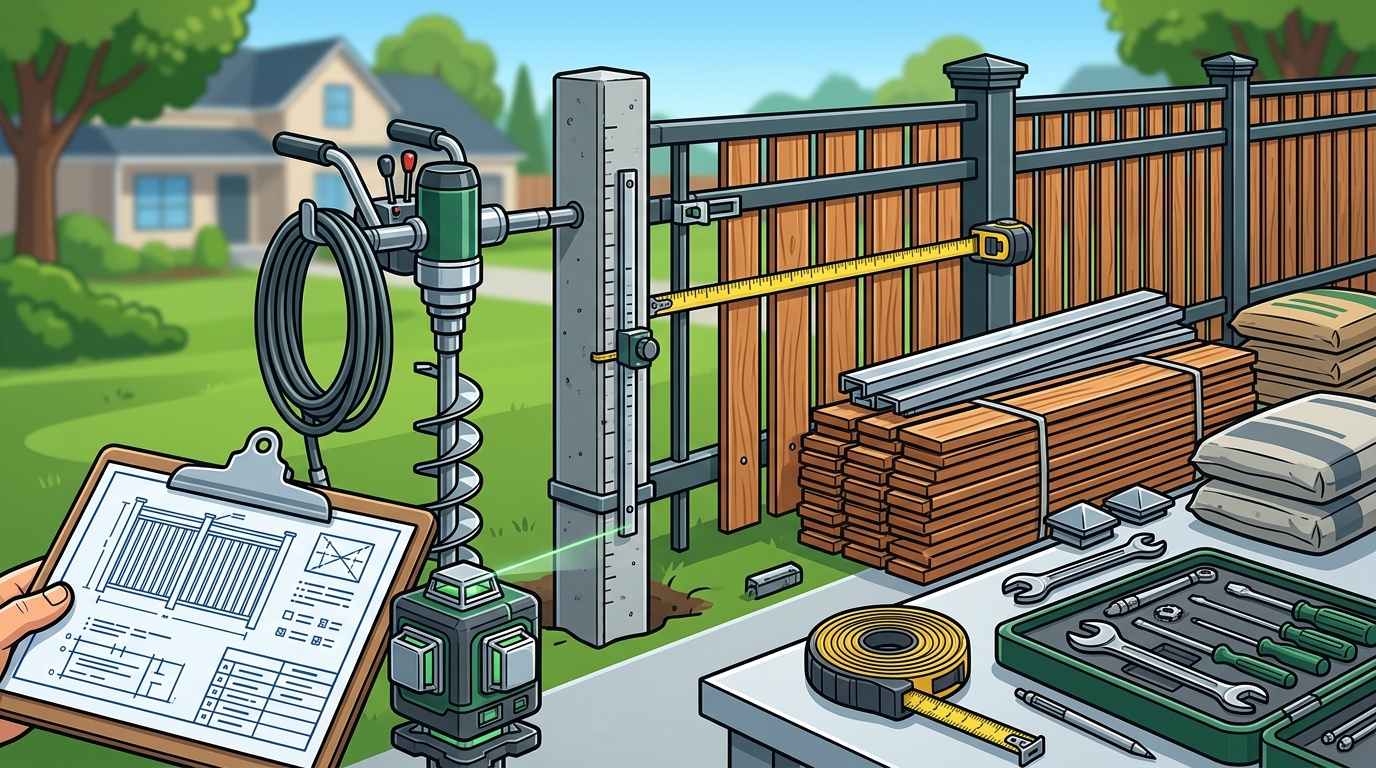
- Invest in proper tools: Under-equipped crews work slower. Quality post-hole diggers, power augers, and laser levels pay for themselves quickly.
- Standardize processes: Documented procedures and quality standards allow you to scale beyond a solo operation without quality dropping off.
Strategy 6: Diversify Into Higher-Margin Niches
Not all fencing work pays the same. Residential wood privacy fences are the bread and butter, but branching into specialty niches can substantially boost your average margins.
Niches worth considering
- Commercial fencing: Security fences, industrial perimeters, and parking lot installations for businesses, schools, and facilities. Average project values range from $15,000 to $75,000 with profit margins of 25–35% and more consistent year-round work.
- Ornamental metal: Premium pricing typically runs 30–50% higher than standard materials.
- Vinyl/PVC: Growing demand driven by low-maintenance appeal.
- Agricultural fencing: Farms and ranches need livestock fencing, horse fencing, and pasture perimeters. Margins run 25–35%, and this niche works especially well in rural markets.
- High-security fencing: Data centers, government facilities, and military bases require advanced materials and technology like integrated motion sensors, commanding premium pricing.
Offering niche services such as wrought iron installation, fence repair, or commercial security fencing helps your company stand out in a crowded market. Seasonal services like fence repair and removal can also generate revenue during slower installation months.
Strategy 7: Build a Lead-Generating Online Presence
In a digital-first world, your online presence can make or break your business. Many fence companies still rely solely on word-of-mouth, leaving significant revenue on the table.
Marketing foundations that drive leads
- Google Business Profile: This is the single most important free marketing asset for a local fence company. Optimize it with photos of completed projects, collect reviews aggressively, and keep your info current.
- Professional website: Showcase past projects, display customer testimonials, and make it dead simple for visitors to request a quote.
- Yard signs and vehicle wraps: These generate consistent, low-cost local visibility before you spend a dollar on paid advertising.
- Social media: Before-and-after project photos on Facebook and Instagram build credibility and attract inquiries organically.
Phased marketing approach
- Months 1–3: Build your foundation with Google Business Profile, website, and yard signs.
- Months 4–6: Expand with Google Local Services Ads and targeted social media advertising.
- Months 7–12: Analyze data and double down on the highest-ROI channels.
Strategy 8: Use Software to Run Tighter Operations
Fence-specific business software eliminates the spreadsheet chaos that causes missed appointments, inaccurate quotes, and billing delays. Modern field service platforms can handle estimating, scheduling, invoicing, and crew tracking in one place.
Key software capabilities to look for
- Automated route planning for installation crews
- Real-time crew tracking and job status updates
- Digital estimating with built-in material and labor calculators
- CRM features to manage leads and follow up on unsold quotes
- Integrated invoicing and payment collection
Standardized processes and customer communication systems allow growth beyond solo operation without things falling through the cracks.
Strategy 9: Protect Profit with Proper Insurance and Risk Management
Nothing destroys profit faster than an uninsured claim. Fence contractors face unique risks: injuries on job sites, property damage during installation, and liability from installation errors can all lead to costly claims.
Essential coverage
- General liability insurance
- Workers' compensation
- Commercial auto insurance
- Commercial property insurance
Recommended additions
- Professional liability (errors and omissions)
- Umbrella policy for additional coverage
- Surety bonds for commercial projects and licensing requirements
Insurance is not just a cost—it is protection for every dollar of profit you have worked to earn. Building a business on a foundation of proper coverage lets you take on bigger projects, win commercial contracts, and sleep at night.
Key Takeaways
- Target a net profit margin of 25–40% on every job. If you are below 20%, audit your pricing formula immediately.
- Always sell on value—warranties, transparency, and tiered packages justify premium pricing.
- Upsell add-ons on every project: gates, staining, automation, and maintenance plans.
- Negotiate supplier deals and track material usage to cut waste.
- Maximize crew productivity through geographic scheduling, proper tools, and zero-gap job pipelines.
- Diversify into higher-margin niches like commercial, ornamental metal, or agricultural fencing.
- Build a lead engine with Google Business Profile, a professional website, and phased paid advertising.
- Use field service software to professionalize estimating, scheduling, and invoicing.
- Carry comprehensive insurance to protect the profit you work hard to earn.
Frequently Asked Questions
What is a good profit margin for a fence company?
A typical profit margin for a fence company is roughly 25–40% of the project's total value. Net profit margins for well-managed operations generally range from 10% to 25% after all overhead, while gross margins sit between 35% and 50%. Highly efficient or specialized companies can achieve margins at the higher end.
How much can a fence business owner earn annually?
Annual owner income typically spans $50,000 to $150,000 or more, depending on business scale, location, and efficiency. Solo operators may earn $50,000 to $80,000, while established companies with multiple crews can generate $120,000 to $200,000+ in owner compensation.
What is the biggest mistake new fence companies make?
Under-pricing jobs is by far the most common and damaging mistake. New contractors often set prices too low to win work, which erodes margins and creates a cycle that is hard to escape. Every quote should fully account for materials, labor, overhead, and a healthy profit margin before it goes out the door.
How do I get more fence leads without paid ads?
Start with a fully optimized Google Business Profile, collect five-star reviews from every happy customer, and invest in a professional website that showcases your work. Yard signs at completed job sites and branded vehicle wraps generate consistent low-cost visibility in your service area.
Is commercial fencing more profitable than residential?
Commercial projects typically have larger contract values ranging from $15,000 to $75,000 and provide more consistent year-round work. Profit margins tend to run 25–35%. However, commercial work comes with longer sales cycles and net-30 or net-60 payment terms, so cash flow management becomes more important.